Attached ADU Portland: Zoning Rules, Design Limits, and Feasibility
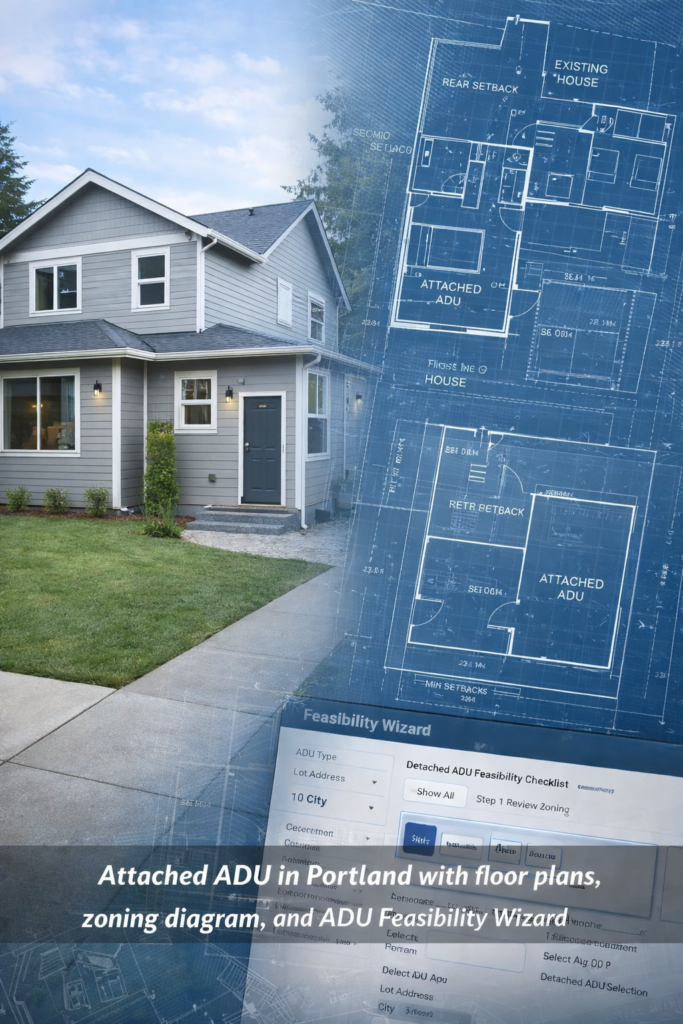
Attached ADU Portland: Zoning Rules, Design Limits, and Feasibility
Building an attached ADU in Portland is a common strategy for homeowners
who want to expand living space without adding a separate structure to their property.
Attached ADUs are often created through additions, garage conversions, or interior
reconfigurations, but they must comply with zoning, setbacks, and development standards
before design begins.
What Is an Attached ADU in Portland?
An attached ADU is an accessory dwelling unit that shares at least one wall
with the primary dwelling. In Portland, attached ADUs may be created by
adding a new structure to the existing house, converting an attached garage,
or reconfiguring interior space to form a separate dwelling unit.
Although physically connected to the main house, attached ADUs are still
regulated as independent dwelling units and must meet applicable development standards.
Attached ADU Zoning Rules in Portland
Most residential zones in Portland allow attached ADUs, but zoning approval
depends on more than just the base zoning designation.
Maximum floor area, height limits, and building envelope restrictions still apply.
While setbacks may be less restrictive than for detached ADUs,
lot coverage, structural limitations, and existing building conditions
often determine whether an attached ADU can be approved.
Attached ADU vs Detached ADU
Homeowners often compare attached ADUs with detached ADUs when planning
an accessory dwelling unit. Attached ADUs typically require less yard space
and may reduce utility connection costs, but they can introduce structural
and layout constraints tied to the existing house.
Detached ADUs offer more flexibility in placement and layout,
but they must meet stricter setback and separation requirements.
Choosing the right approach starts with feasibility evaluation.
Common Design Constraints for Attached ADUs
Attached ADUs must integrate with the existing structure,
which can limit layout options, ceiling heights, and exterior access.
Fire separation, sound insulation, and structural reinforcement
are often required.
Because of these constraints, feasibility analysis is critical
before investing in architectural or structural drawings.
Why Feasibility Comes Before Design
Many attached ADU projects face delays when zoning limits or
structural constraints are discovered after design work begins.
Confirming attached ADU feasibility in Portland early
helps prevent redesigns, added costs, and permit corrections.
A feasibility review confirms whether the proposed attached ADU
is realistically approvable before detailed plans are prepared.
How the ADU Feasibility Wizard Evaluates Attached ADUs
Our interactive
ADU Feasibility Wizard
evaluates attached ADU potential across Portland and the surrounding PDX region,
including Beaverton, Gresham, Hillsboro, Salem, Keizer, and Marion County.
For a $250 upgrade, the Wizard allows you to download preliminary ADU plans
for revision or upload your own plans to confirm zoning compliance,
development standards, and design feasibility.
Start With Feasibility Before You Build
If you’re planning an attached ADU in Portland,
start with feasibility before committing to design.
Use the
ADU Feasibility Wizard
to evaluate your lot, confirm zoning allowances,
and move forward with confidence.